Future
Transforming the Museum’s Environmental Footprint
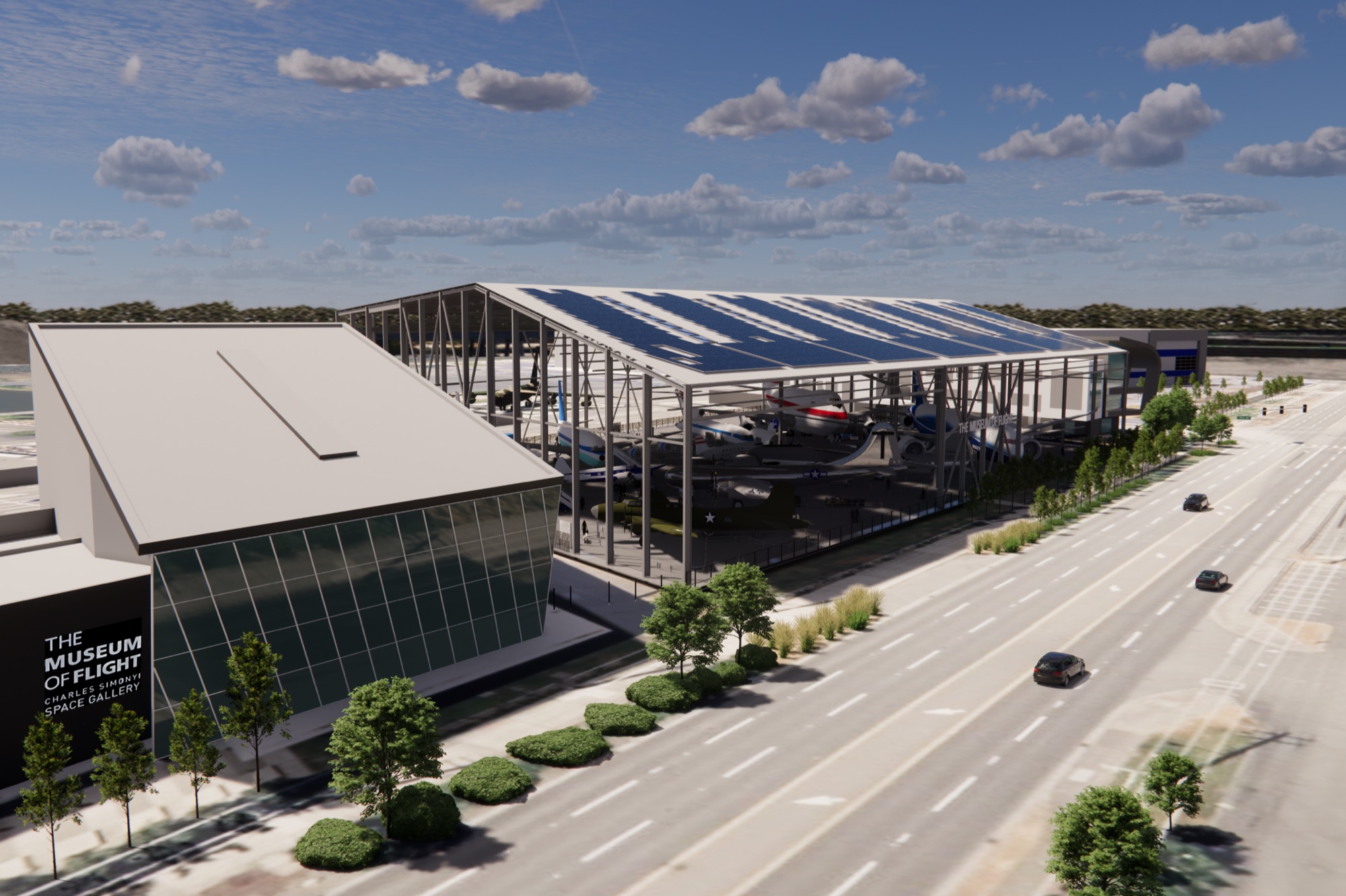
It’s three acres in size, but you’ll barely notice it when it’s completed in 2027. It’s a massive new solar array on the 140,000-square-foot roof of The Museum of Flight’s Aviation Pavilion.
“The installation of solar power at the Aviation Pavilion is one component of the Limitless campaign and directly advances the sustainability goals outlined in our strategic plan,” said Museum President and CEO Matt Hayes. “It reflects our commitment to creating a campus that not only inspires visitors through exhibits and programs but also serves as a model for responsible environmental leadership.”
The benefits will be immediate and last for decades. The solar array will generate just over one million kilowatt hours of renewable electricity annually, enough to supply all of the energy needs of the current west campus. It’s estimated the 1,863 solar panels installed will also reduce carbon emissions by 123 metric tons each year, the equivalent of planting more than 12,000 trees.
Project managers say any excess energy will flow back into the electrical grid. And the money saved by transitioning to clean energy will be reinvested in the Museum and its core missions of preservation and education.
The Solar Power Project is funded in part by a $1.23 million Clean Energy Grant from the Washington State Department of Commerce.
“The State of Washington’s investment helps us model the innovative thinking we encourage in our students and visitors. This clean energy initiative is more than an infrastructure project —it’s a community asset that will strengthen the Museum’s impact for decades to come,” said Hayes.
The Aviation Pavilion Solar Power Project is part of a comprehensive effort to transform the campus, expand educational opportunities, and strengthen the Museum’s long-term impact on the community. This and many other projects are made possible through the generosity of the Museum’s partners, including individual donors, corporate supporters, foundation funders and government agencies. State grant funding represents an important piece of this collaborative investment in the Museum’s future.
The solar project demonstrates how philanthropy, public support, and community partnership can come together to advance environmental responsibility while creating lasting benefits for future generations.